A request asked which procedures were in force and which authorised channels were available for reporting unauthorised construction. It did not ask whether a particular structure was lawful. It asked how such a question could enter the administration.
The authority answered by changing the request. It treated the question as legal advice or as a petition outside the public-information procedure.
Uruguay’s public-information authority later disagreed. Existing procedures and available reporting channels were themselves public information. If the request had seemed unclear, clarification could have been sought.1
Before searching for an answer, the institution had decided what the question was.
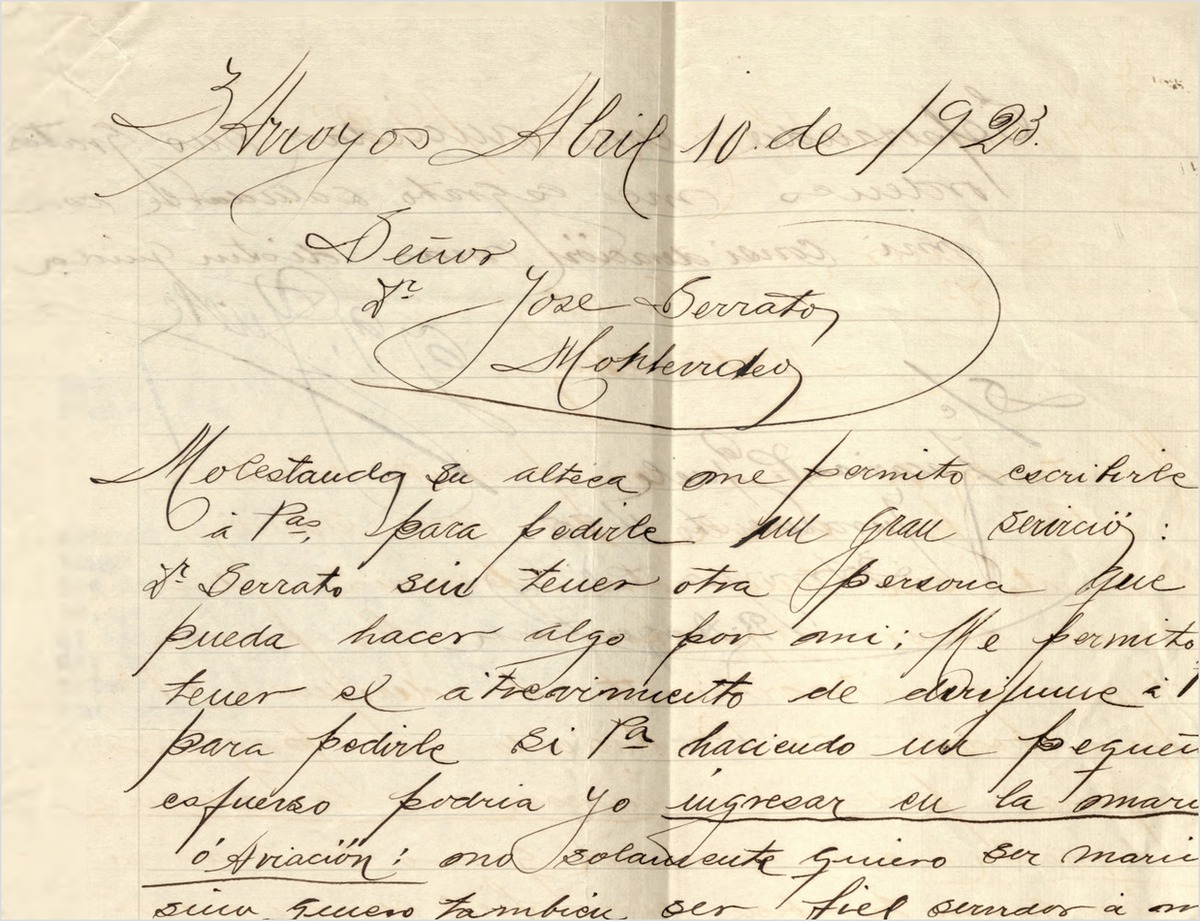
A century earlier, another request arrived at a high office in Uruguay. In April 1923, Zacarías Yuele wrote by hand to President José Serrato and asked for help entering the navy or aviation.
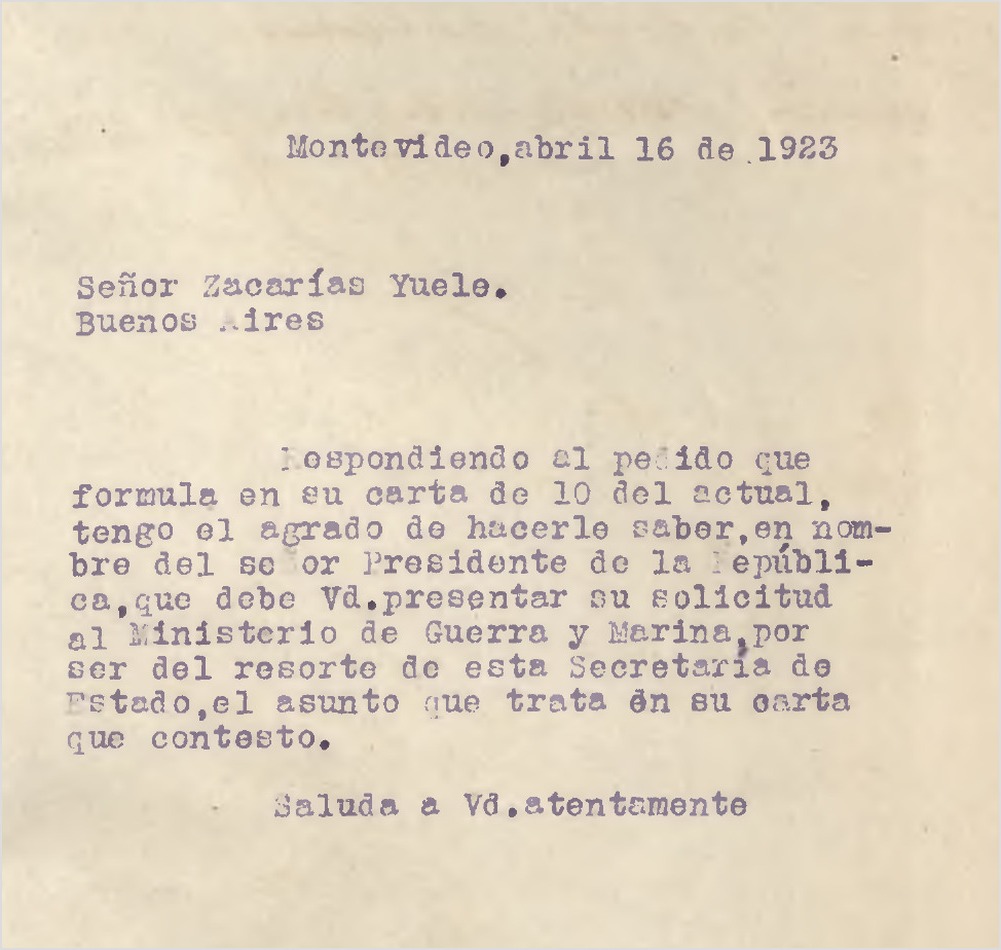
The archive preserves the request and a typed reply as one unit. The reply did not decide whether he should be admitted. It told him that the application had to be submitted to the Ministry of War and Navy.2
The handwriting addresses a president. The reply returns a ministry.
The older response changed where the request belonged. The contemporary response changed what the request was.
The comparison does not establish an unbroken administrative tradition. It isolates two operations before substance. A public body may identify another competent office and give the question a new direction. It may also recode the question so that the duty attached to its original form no longer applies.
‘Not our responsibility’ can describe a jurisdiction. It can also terminate responsibility.
An institution may lack power to decide the substance while still deciding whether to name the right office, preserve the trace or leave the person to begin again.
A German building-control file produced a related movement. Questions about the receipt of evidence and the status of a current procedure were first reframed as matters for technical advice, then as matters of procedural standing.
The file did not change. What changed was the institutional account of why the people living through that uncertainty could not reach it.3
No Such Record
A state justice ministry was asked for existing guidance on judicial inspections of occupied homes: organisational instructions, the handling of photographs, the protection of private areas outside the dispute and the position of parties without legal representation.
The ministry consulted its responsible units, searched its administrative systems and formally stated that no such guidance, circular or comparable record existed.
The refusal did not claim confidentiality. It relied on a familiar boundary. The access law created no duty to acquire, create or generate information that was not already held.4
Legally, the distinction is clear. Institutionally, it is not innocent.
The absence concerned the administration’s own preparation for entering homes, recording interiors and organising encounters in which knowledge, representation and control may be unevenly distributed.
No record was not the absence of government. It described one of the conditions under which government had been taking place.
A request in Rocha met a related but different limit. It asked for one complete register of official street names and rural roads. The answer pointed instead to older paper files, later digital proceedings, a national map viewer and a legal database.5
The information was not secret. It existed across several places without existing as the single object that had been requested.
The requester received a map of repositories instead of a list.
The organisation of the record became the organisation of access. What the institution had not already related, counted or named in one form remained work for the person asking.
Administrative-burden research distinguishes the costs of learning, complying and enduring a procedure. Here the burden begins earlier. The person must sometimes supply the relation that the institution has never recorded: identify the categories, connect the offices and demonstrate that the requested object should be capable of existing.6
What Silence Keeps
Two requests to a German state ministry asked for statistics on the administration of student support.
One concerned extensions of the maximum funding period for service in university and student bodies. The other concerned funding cuts attributed to changes of subject, the use of a statutory continuation rule, appeals, court proceedings and any internal guidance.
Only the first request was acknowledged. By late July 2026, neither had received a substantive answer.7
‘We do not hold these figures’ would have been an answer.
It would have made the absence of data an institutional fact that could be examined, challenged or compared with other records.
Silence does something else.
It withholds the requested information, but it also withholds an account of what the institution knows, counts or has chosen not to count. Even ignorance fails to acquire an address.
The same body of material prevents a total account of administrative refusal.
A later web request in Rocha, asking how public-information requests are received and registered, was assigned an expediente the following day. The message named the responsible transparency office and indicated that the case could be followed online.8
In another proceeding, the administration answered questions about training in artificial intelligence with unusual directness. Participation had been limited; no formal evaluation existed and a wider strategy remained unfinished.9
Administrative openness was not absent. It was unevenly distributed.
The variation matters because it shows that evasion is not the only voice available to the institution.
Public Enough
A published Rocha file declared that an information request had been answered. Its closing resolution referred to other folios as the location of the substantive response. Those folios were not included in the public PDF.10
The publication contained a cover, the request and the act that closed the procedure. It allowed the public to verify that disclosure had been administered. It did not allow the public to inspect what had been disclosed.
The administration published the completion of disclosure without publishing the answer.
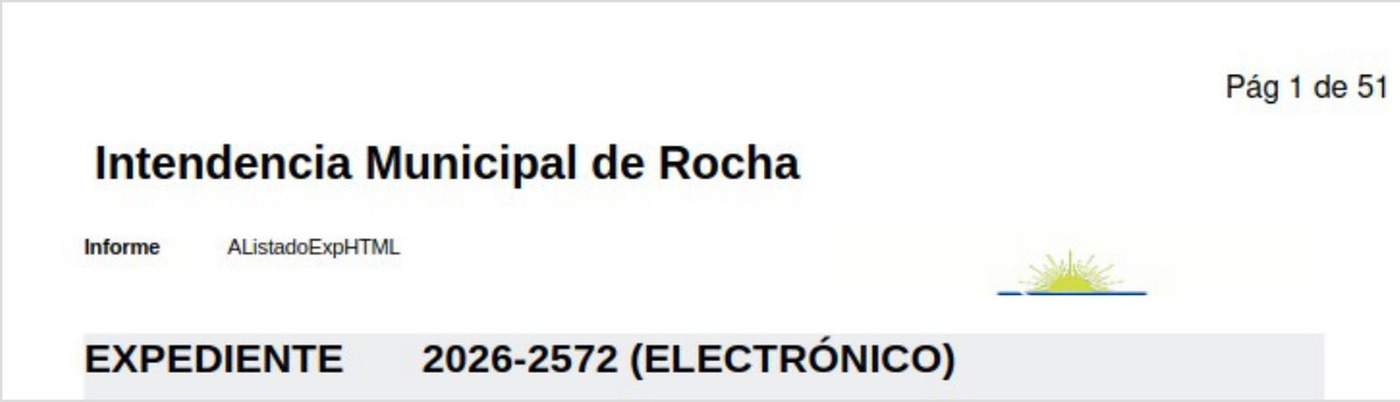
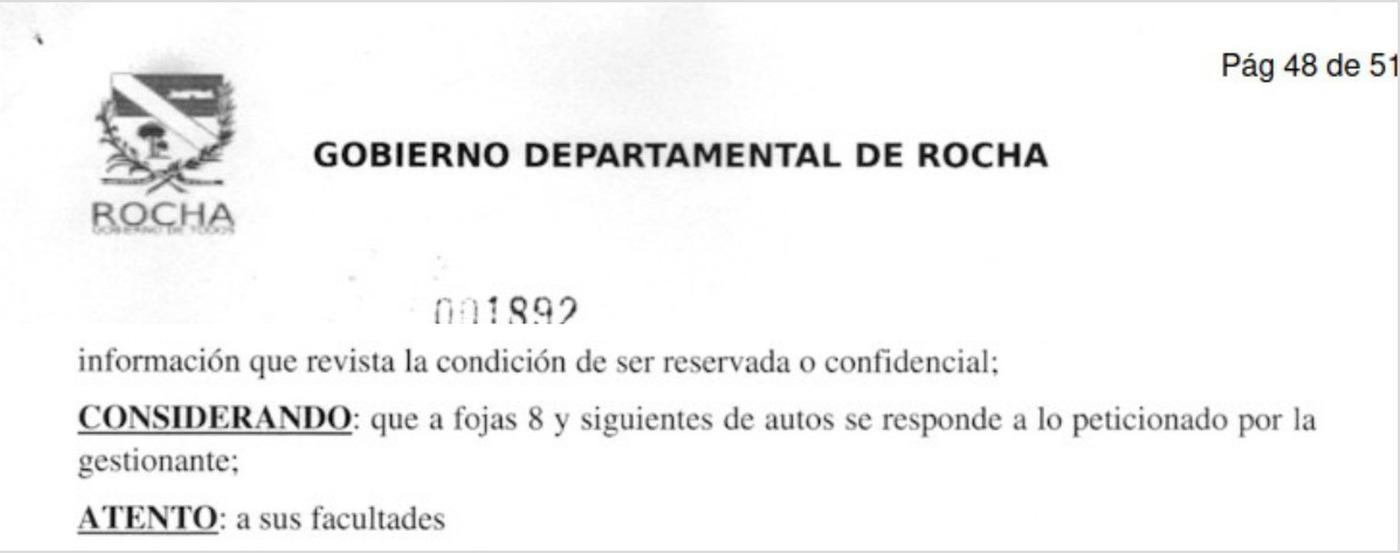
The historical unit from 1923 binds the handwritten request and the typed reply into one archival object. The contemporary public file performs a different binding.
It joins request and completion while leaving the material answer elsewhere.
Neither form is transparent by itself. Each decides which relation between question and response can be seen.
This distinction sharpens the current political horizon in Germany. Federal law still grants everyone a right to official information without requiring a special interest. On 2 July 2026, the governing coalition agreed to focus future access rights on natural persons who can show a legitimate interest and cannot obtain the information through another route. It also agreed to examine residence or citizenship limits and to adjust fees towards cost recovery. By late July 2026, the coalition had agreed on a political programme. It had not amended the law.11
Separate reporting on internal ministry papers suggested that the platform through which requests are submitted, preserved and compared was itself under scrutiny. The reporting and the official coalition decision are not the same kind of source.12
Their direction nevertheless converges at one point. More of the applicant must become legible before the record does.
An address is more than an office, an email account or a file number. It is the relation that allows a question to remain the same question as it passes through classification, registration, search, response and review.
A question has an address when an institution cannot change its category, invoke the limits of its own records or retreat into silence without leaving an accountable trace.
The address of a question is the responsibility an institution cannot redirect, unrecord or leave unanswered.
Public information is governed before it is disclosed.
Notes
- Intendencia Departamental de Rocha, Expediente 2026-2111, including the report of Uruguay’s Unidad de Acceso a la Información Pública dated 20 April 2026. The underlying request concerned the current procedure and authorised channels for reporting unauthorised or unregularised construction. Source ↩
- Archivo Histórico de la Biblioteca del Poder Legislativo, UY-BPL-AH-A.PE-JS-A-76, ‘Solicitud particular’, 10 April 1923. The archive describes a three-folio paper unit consisting of a signed handwritten request and a typed response sent on 16 April 1923. Source ↩
- Stadt Halle (Saale), correspondence concerning building-control procedure 181-2026, including responses dated 18 March and 7 May 2026, held by the author. ↩
- Ministerium für Justiz und Verbraucherschutz des Landes Sachsen-Anhalt, Ablehnungsbescheid, 7 May 2026, file 3710-202-1/11. The decision states that the IZG LSA creates no duty to the ‘Beschaffung, Erstellung oder Generierung bislang nicht vorhandener Informationen’ and records searches in the ministry’s responsible units and administrative systems. ↩
- Intendencia Departamental de Rocha, Expediente 2026-1371, publicly released web file, 2026, concerning a requested complete register of official street names and rural roads. Source ↩
- Donald Moynihan, Pamela Herd and Hope Harvey, ‘Administrative Burden: Learning, Psychological, and Compliance Costs in Citizen-State Interactions’, Journal of Public Administration Research and Theory 25, no. 1 (2015), 43–69. The extension made here concerns the work of assembling relations that an institution does not maintain in the requested form. Source ↩
- Requests to the Ministry for Science, Energy, Climate Protection and the Environment of Saxony-Anhalt dated 30 August and 2 October 2025, held by the author. The first request was acknowledged on 2 September 2025. By late July 2026, no acknowledgement of the second request and no substantive response to either request had been received. ↩
- Intendencia Departamental de Rocha, División de Auditorías Internas | Transparencia, email ‘Solicitud información pública’, 24 July 2026, assigning expediente 2026-3411. Correspondence held by the author. ↩
- Intendencia Departamental de Rocha, Expediente 2026-1157, publicly released web file, 2026, concerning institutional training in artificial intelligence since 2023. Source ↩
- Intendencia Departamental de Rocha, Expediente electrónico 2026-2572, publicly released web excerpt, 2026. The closing resolution states that the substantive response appears on folios omitted from the published PDF. Source ↩
- Germany, Informationsfreiheitsgesetz, § 1, current version; German Federal Government, ‘Ein Programm für Aufschwung und Beschäftigung’, coalition committee decision, 2 July 2026, point 32. The coalition decision records a political agreement. It is not legislation and had not altered § 1 IFG by late July 2026. Current IFG § 1 Coalition committee decision ↩
- FragDenStaat, ‘Neue Pläne im Innenministerium: Dobrindt will FragDenStaat ausschalten’, 23 July 2026. Source ↩
Image Credits
Archivo Histórico de la Biblioteca del Poder Legislativo, UY-BPL-AH-A.PE-JS-A-76, ‘Solicitud particular’, 10 and 16 April 1923. Digital facsimile; details cropped and assembled by the author.
Intendencia Departamental de Rocha, Expediente electrónico 2026-2572, publicly released web excerpt, 2026. Details cropped and assembled by the author; personal data omitted.
Cite As
Tobias Daum, A Question Without an Address: Public Information Before the Answer, Stelle 39 04 (2026), https://stelle39.com/a-question-without-an-address/.